
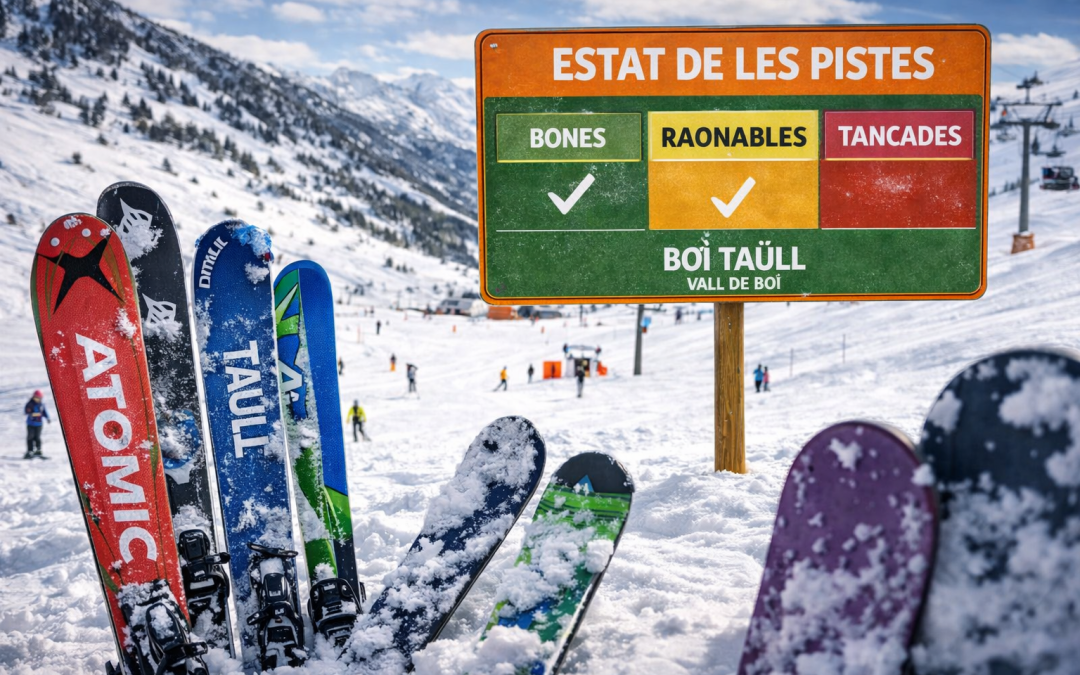
What students really learn on a school trip to the snow
Introduction
School trips to the snow are usually mainly associated with learning to ski. However, when an educational center organizes an experience of this type, the educational impact goes far beyond the practice of sports. For several days, students live an intense experience of coexistence, personal autonomy and learning outside the usual classroom environment.
The mountain context, the practice of a new sport and the coexistence with classmates and teachers generate an educational scenario very different from that which occurs during traditional classes. This change of environment allows the development of skills that do not normally appear in the school day-to-day.
For this reason, more and more schools are considering school trips as a complementary pedagogical tool to the academic curriculum. A well-organized trip can reinforce values such as responsibility, cooperation, autonomy and respect for the natural environment.
Learning through experience
One of the most valuable aspects of school trips is experiential learning. Instead of receiving information theoretically, students learn through practice and direct experience.
In the case of skiing, students are faced with a completely new environment. They learn to put on the equipment, to balance on the skis and to coordinate movements that require concentration and physical effort.
This learning process involves overcoming small progressive challenges. At first, many students feel insecure or afraid at the idea of sliding down a slope. However, with the support of the monitors and the group, most of them manage to advance quickly.
This type of learning reinforces personal confidence and shows students that they are capable of overcoming challenges when they have support and perseverance.
Personal autonomy
During a school trip, students find themselves in an environment where they must take on day-to-day responsibilities that are normally managed by families. Preparing the material, organizing their luggage or respecting schedules are small tasks that contribute to developing autonomy.
On a trip to the snow, these responsibilities become even more apparent. Students must learn to take care of their ski equipment, to keep their room tidy and to manage their time between different activities.
Teachers and monitors accompany this process, but the aim is for students to progressively develop their organisational skills.
This learning is especially valuable at an early age, as it reinforces personal responsibility and the ability to make decisions.
Teamwork
School trips naturally encourage teamwork. During the stay, students share experiences with classmates with whom they may not usually interact in the classroom.
Ski lessons are usually organized in small groups where each participant has a different level. This diversity is conducive to cooperation, as students who progress faster tend to help those who need more time to learn.
It is also common for support dynamics to be generated between colleagues. Sharing a new activity and overcoming common challenges strengthens the bonds of the group.
These experiences contribute to improving the climate of coexistence within the class group once the students return to the school.
Managing emotions
Learning to ski involves facing situations that can generate intense emotions. The feeling of speed, balance on the snow or the first falls are part of the learning process.
During the trip, students learn to manage emotions such as fear, frustration or the joy of achieving new achievements.
This process is very valuable from an educational point of view. Students discover that making mistakes is part of learning and that progress is built on small advances.
In addition, the presence of the group and the teaching staff creates a safe environment where students can express these emotions and learn to manage them.
Respect for the natural environment
The mountain offers a privileged natural environment that allows you to work on values related to respect for the environment.
During school trips to the snow, students come into direct contact with a landscape different from their usual environment. This contact favors awareness of the importance of preserving natural spaces.
Many educational programs include explanations about the functioning of mountain ecosystems, local fauna or the importance of conserving the landscape.
These activities help to reinforce respect for nature and encourage responsible attitudes towards the environment.
Coexistence outside the classroom
One of the most enriching elements of school trips is living together outside the usual context of the classroom. For several days, students and teachers share experiences in a completely different environment.
This change of context allows us to get to know our colleagues from a different perspective. Students interact in sports activities, leisure moments and spaces for daily coexistence.
For teachers, this coexistence also offers an opportunity to observe group dynamics that do not normally appear in the classroom.
Living together outside the school environment usually strengthens relationships between peers and improves group cohesion.
Discovering new skills
School trips allow many students to discover skills they had not previously developed. Some students show a great facility for sports, while others stand out for their leadership skills or collaborative attitude.
These skills often appear spontaneously in a context other than the classroom. Teachers can observe how some students assume positive roles within the group.
This discovery of skills helps to strengthen students’ self-esteem and broaden their perception of their own abilities.
The value of shared memory
For many students, school trips to the snow become one of the most meaningful memories of their educational stage. The experiences lived during these days usually remain in the memory for many years.
Sports learning, group activities and coexistence generate memories that strengthen the bond between peers.
This shared memory contributes to building a collective identity within the class group and to strengthening relationships between students.
Conclusion
A school trip to the snow is much more than a sporting activity. It is a complete educational experience that combines learning, coexistence and personal development.
Through skiing and activities in the mountains, students develop skills related to autonomy, cooperation and emotion management.
When these trips are organized properly, they become a very valuable educational tool that complements academic learning and contributes to the integral development of the student body.


