
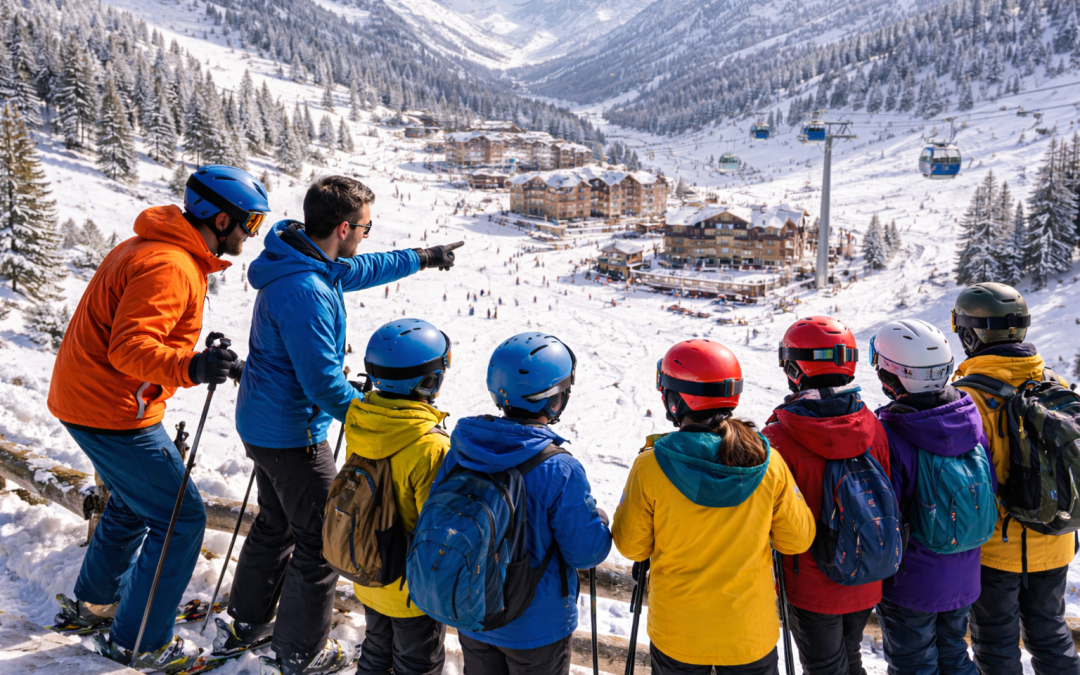
Organizing a school trip to the snow involves making many important decisions. One of the most relevant is to correctly choose the ski resort where the activity will take place. The choice of destination not only influences the quality of the sports experience, but also key aspects such as safety, travel logistics, student learning and the comfort of accompanying teachers.
Not all ski resorts are the same or prepared to receive school groups. Some resorts are mainly aimed at individual or family tourism, while others have infrastructures and programs specifically designed for the formation of educational groups.
For this reason, choosing the right resort is one of the factors that most influences the success of a school ski trip. When the destination is well chosen, the organization is simplified, students learn more easily and the overall experience is much more positive.
Specialized companies such as Alpino Club carefully select the stations they work with precisely to ensure that they meet a series of pedagogical, logistical and safety requirements that facilitate the educational experience.
The importance of beginner slopes
One of the most important aspects when choosing a resort for a school trip is the availability of slopes suitable for beginners. On most school trips, a large part of the students have no previous experience in skiing. Therefore, it is essential that the station has large and safe areas where students can learn in peace.
Resorts suitable for school groups usually have areas called beginners’ areas or green slopes. These slopes have a low slope and allow students to learn the basics of skiing without being intimidated by the terrain.
When a station has a good learning area, the progress of the students is usually faster. Students gain confidence progressively and can progress to more difficult tracks as they improve their technique.
Infrastructure for school groups
Not all stations are prepared to receive large groups of students. The stations that usually work with educational centers usually have adapted infrastructures to facilitate organization.
Among the elements that are especially useful for school groups are:
- Spacious and organized equipment rental areas.
- Spaces reserved for educational groups.
- Ski schools with specialized instructors.
- Restaurants with capacity for groups.
- Accessible rest areas.
When the station is used to receiving schools, the daily logistics are much simpler.
Accessibility and distance from the educational center
Another important factor is the distance between the school and the ski resort. Too long journeys can be tiring for students and complicate travel arrangements.
For this reason, many schools opt for relatively accessible resorts that allow them to optimize the time available for activities in the snow.
The duration of the journey influences several aspects:
- The comfort of the students.
- The organization of transport.
- The time available for skiing.
- Planning the arrival time.
Choosing a well-connected station greatly facilitates the logistics of the trip.
Snow and altitude conditions
The quality of the snow is a fundamental aspect of any ski trip. Stations located at higher altitudes tend to offer better conditions for longer throughout the season.
In addition, many resorts have artificial snow systems that guarantee the preparation of the slopes even when the weather conditions are less favorable.
The combination of the right altitude and snow production systems allows school groups to develop their program more safely.
Station Safety
Safety is a top priority on any school trip. Stations that work with educational groups usually have clear safety protocols and specialized personnel in assistance on the slopes.
Among the safety elements that should be valued are:
- Rescue services on slopes.
- Clear signage of the slopes.
- Delimited areas for beginners.
- Ski lift control.
- Medical services nearby.
These elements help ensure that students can play the sport in a controlled environment.
Organization of ski lessons
Resorts suitable for school trips usually have ski schools with experience in forming educational groups. The instructors are used to working with students and adapt their methodology to the level of each group.
Classes are usually organized in small groups to facilitate learning. This system allows each student to receive personalized attention and to progress at their own pace.
Complementary services for groups
In addition to the slopes and ski lessons, many resorts offer complementary services that enhance the school trip experience.
Among these services we find:
- Restaurants adapted to school groups.
- Rest spaces for teachers.
- Complementary activities.
- Picnic areas.
These elements contribute to making the day at the resort more comfortable and organized.
Natural environment and educational value
The mountain offers a natural environment that brings additional educational value to the school trip. Students have the opportunity to get to know different landscapes and learn to respect the natural environment.
Many school trips include nature-related educational activities, such as talks about the mountain ecosystem or the importance of conserving natural resources.
Season’s Impact on the Educational Experience
Choosing a suitable station has a direct impact on the overall travel experience. When the destination is well selected, learning to ski is smoother, daily organization is simplified and the group can fully enjoy the experience.
On the contrary, an inappropriate choice can generate logistical difficulties, unnecessary waiting times or clues that are too complicated for the level of the students.
The role of specialized companies
Companies that specialize in school trips to the snow are usually in charge of selecting the most suitable resorts for each program. Their experience allows them to identify which destinations work best with school groups.
In addition, these companies coordinate logistical aspects such as equipment rental, ski lessons and the organization of schedules at the resort.
Conclusion
Choosing the right ski resort is one of the most important decisions when organizing a school trip to the snow. Factors such as beginner slopes, group infrastructure, safety, and accessibility directly influence the quality of the experience.
When the destination is well chosen and the trip has a professional organization, students can enjoy a unique educational experience that combines sport, nature and coexistence.


