
How to organise a school trip to the snow step by step (guide for schools)
Organizing a school trip to the snow is one of the most complete activities that an educational center can offer. It combines sport, coexistence, autonomy and learning outside the classroom. However, for the experience to be a success, rigorous planning and a professional structure that guarantees safety, control and peace of mind for both teachers and families are essential.
In this guide we detail how to organise a school ski trip step by step, what a school should consider and what aspects make the difference between an impromptu experience and a really well-managed trip.
What should the school define before organizing a school trip to the snow?
Before contacting an agency specialized in school trips to the snow, the educational center must specify several key points:
- The educational stage. It is not the same to organize a trip for primary school as for secondary school. The dynamics, the autonomy of the students and the type of supervision change.
- The approximate number of participating students. This data conditions ratios, accommodation, transport and structure of the team of monitors.
- The expected dates . It is advisable to start organizing the trip several months in advance to guarantee availability at the station and hotel.
- The main objective of the trip. It can be a coexistence trip, a sports experience, an end of the year or a complementary activity to the educational project.
Defining these elements from the beginning allows us to design a school trip to the snow adapted to the reality of the school and not a standard package without customization.
Choice of destination and ski resort suitable for school groups
Not all stations are prepared to receive school groups. When organising a school ski trip, it is essential to assess:
- Large area for beginners for students with no previous experience.
- Slopes with comfortable and safe progression.
- Station configuration that facilitates monitoring.
- Medical service at the foot of the slopes.
- Facilities adapted to the school public.
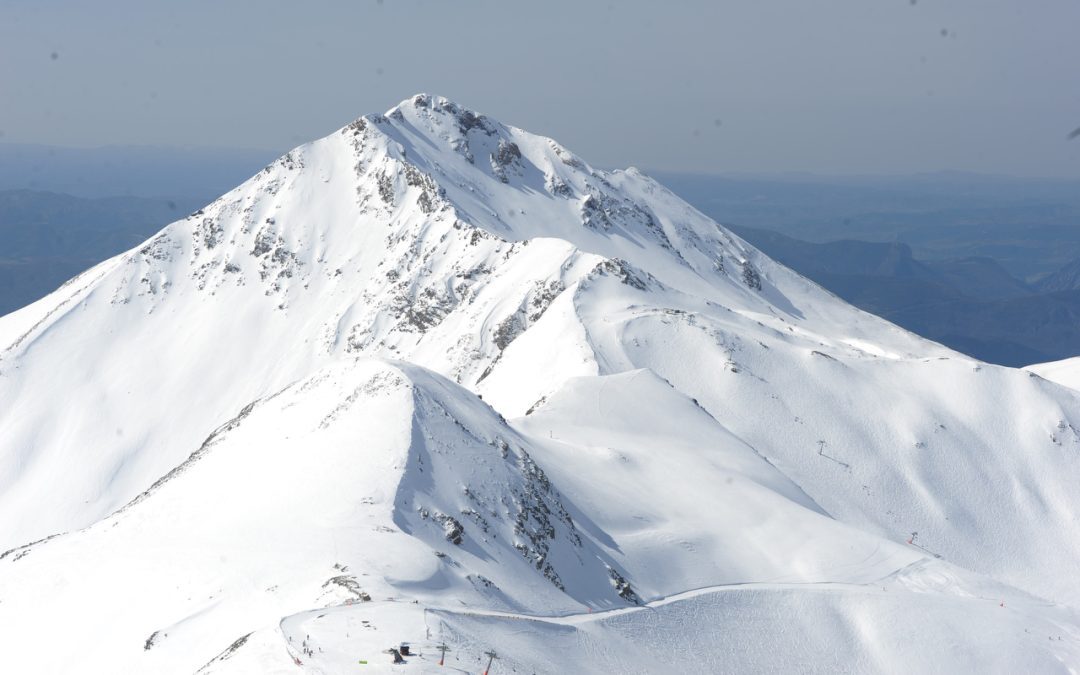
An example of a suitable destination is Boí Taüll, in the Lleida Pyrenees, with a base at 2,030 metres and a maximum altitude of 2,751 metres. It has 47 skiable kilometres and 43 slopes, with a structure that allows the slopes to converge at the base, making it easier for the group to control. In addition, it has a medical service equipped with radiodiagnosis, a key aspect in school trips.
Choosing the right station reduces risks and improves the student experience.
Complete logistical planning of the school trip
One of the most common mistakes when organizing a school trip to the snow is underestimating the logistics. A well-structured trip should include:
- Organised transport from the school itself, with defined schedules and scheduled stops.
- Accommodation adapted to school groups, with organised room distribution and child control.
- Full board, including breakfast and dinner in a buffet hotel and lunch on the slopes.
- Management of food intolerances and allergies both in hotels and at the station.
- Equipment rental included: skis or board, boots, poles and helmet mandatory.
Including the material in the package itself avoids problems arising from the use of one’s own equipment and ensures that all students use revised and appropriate material.
When logistics are closed before the trip, teachers can focus on educational support and not on solving unforeseen events.
Daily dynamics on a school ski trip
A school trip to the snow isn’t just about skiing. The daily structure is what turns the experience into a complete educational activity.
The usual dynamics include:
- Breakfast and organized transfer to the station.
- Four hours a day of ski lessons with sports technicians.
- Additional supervised skiing according to level.
- Lunch on the slopes.
- Afternoon activities.
- Dinner and evening activities led by leisure and free time monitors.
- Structured rest until the next day.
This organization allows you to combine technical learning in skiing with coexistence, autonomy and personal development.
Safety on school trips to the snow: ratios, monitors and insurance
Safety is the main factor that any school values when organising a school trip.
A professional trip must include:
- Sports technicians with a degree in alpine skiing.
- Qualified monitors in leisure and free time.
- Ratios defined on the track (for example, 1 monitor for every 25 students in organized classes).
- Medical assistance and accident insurance included in the price.
- Possibility of optional cancellation insurance.
In addition, the existence of medical service at the station and constant supervision significantly reduce risks.
It is important that the school is clear about what the included insurance covers and what responsibilities correspond to the agency and which to the school itself.
Transparent economic management and payment facilities
Cost is another determining factor in the organization of a school trip to the snow.
A clear economic structure should include:
- Fixed price that includes accommodation, meals, ski pass, classes, material and insurance.
- Possibility of single or installment payment without interest.
- Funding support systems, such as solidarity ballots managed online.
- Optional cancellation insurance for peace of mind.
Financial transparency avoids subsequent conflicts with families and facilitates the internal approval of the trip by the center.
Distribution of responsibilities between the centre and the organising agency
For a school trip to the snow to work properly, there must be a clear distribution of roles.
The specialized agency manages:
- Accommodation and station reservations.
- Ski equipment and lessons.
- Sports monitors and technicians.
- Insurance and coordination at destination.
- General logistics of the trip.
The educational center maintains:
- Pedagogical control of the group.
- Designation of accompanying teaching staff.
- Internal communication with families.
This balance allows teachers not to take on technical tasks that do not correspond to them and to focus on accompanying students.
Why organising a school trip to the snow with a specialised agency makes a difference
Organizing a school trip to the snow without a professional structure can lead to organizational overload and increase the risk of logistical errors.
Having an agency specialized in school ski trips provides:
- Accumulated experience in group management.
- Defined safety protocols.
- Qualified technical team.
- Advance planning.
- Peace of mind for the centre and families.
A well-planned trip is not only a sporting experience, but also an educational tool that promotes coexistence, autonomy, discipline and self-improvement.
Organizing a school trip to the snow requires planning, structure and professionalization. When the process is well designed, the educational center gains in security, clarity and tranquility, and the students live an unforgettable training experience.
If you are considering organizing a school ski trip for your center, it is best to start planning early and have a specialized team that manages every detail.


