
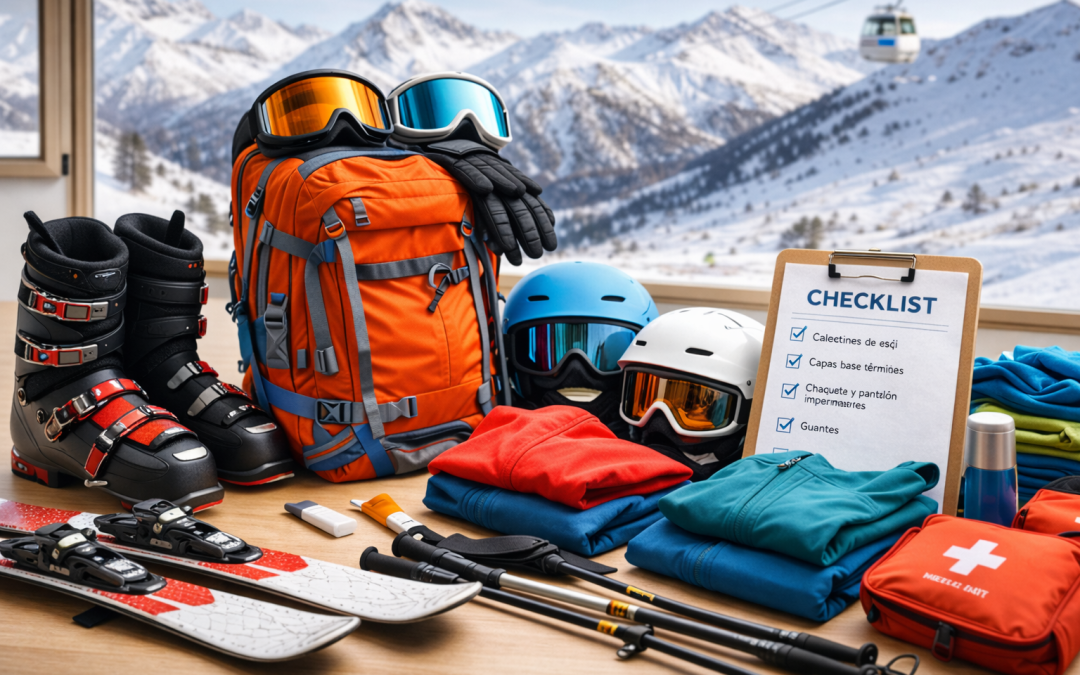
What material a student really needs for a school trip to the snow
When an educational center organizes a school trip to the snow, one of the most frequent questions that teachers and families receive is what material the students really need to participate in the activity. For many students, this is their first experience in the mountains during the winter and therefore many doubts arise about the appropriate clothing, the necessary equipment and what elements the organization of the trip provides.
Understanding the necessary material correctly allows you to avoid unnecessary purchases, reduce the worry of families and ensure that students can enjoy the experience safely and comfortably. In school ski programs, the main goal is to facilitate logistics for schools and allow students to focus on learning and enjoying the sport.
In programmes organised by specialist companies such as Alpino Club, much of the technical material is managed directly at the ski resort, which greatly simplifies organisation for teachers and avoids transporting bulky equipment from the school.
In this article we explain in detail what equipment is really necessary for a school ski trip, how the technical equipment is organized and what recommendations help students to live a comfortable and safe experience in the snow.
Differentiate between technical material and personal material
The first step in understanding the equipment needed on a school trip to the snow is to clearly differentiate between two types of equipment: technical equipment used for skiing and personal equipment related to clothing and protection against the cold.
The technical material is what allows the sports activity to be carried out on the track. Includes skis, boots, poles and helmet. This equipment is usually provided by the organization of the trip by renting at the ski resort.
Personal material, on the other hand, depends on each student. These are the clothing and accessories necessary to maintain body heat, protect against humidity and ensure comfort during active hours.
Technical equipment used on a school ski trip
On school ski trips, technical equipment is usually delivered directly to the resort. This system avoids logistical complications and allows the equipment to be correctly adjusted to each student.
Skis
Skis are the main element of the equipment. School ski programs use models designed to facilitate learning. They are usually more flexible and slightly shorter, allowing for more control during the first few hours of practice.
The size of the skis is selected based on the height and weight of the student. The staff of the rental shop is in charge of making the appropriate adjustment.
Ski boots
The boots transmit the movement of the body to the skis. For this reason, it is essential that they fit correctly to the student’s foot. A correct fit improves control and prevents discomfort during activity.
Canes
Poles help maintain balance and facilitate certain movements while learning to ski. At very early levels, some teachers may temporarily do without them.
Helmet required
The helmet is an essential safety element. It is currently considered mandatory in most school ski programs. Its function is to protect the head against falls or small impacts.
How the delivery of the material at the station works
When the group arrives at the ski resort, the students pass through the rental area where they receive the technical material. This process is usually organized quickly to avoid delays.
Necessary clothing for the snow
The most recommended system for dressing in the snow is the layering system. This system allows you to adapt to temperature changes and keep the body dry.
First layer: thermal clothing
The first layer is in direct contact with the skin. Its function is to maintain body heat and evacuate moisture generated by physical effort.
- Long-sleeved thermal shirt
- Thermal pants
Second layer: insulation
The second layer retains body heat. Garments such as fleeces or technical sweatshirts are usually used.
Third layer: outer protection
The outer layer protects against wind and snow.
- Waterproof jacket
- Waterproof pants
Important Accessories for Skiing
In addition to the main clothing, some accessories are very important to improve comfort and safety.
Gloves
Waterproof gloves protect your hands from the cold and snow.
Sunglasses or ski mask
Solar radiation in the mountains is intense due to the altitude and the reflection of the snow.
Sunscreen
Sun protection is essential even on cloudy days.
Neck gaiter
Protects the neck and face from the wind.
How to pack for a school ski trip
Preparing your suitcase correctly helps to avoid forgetfulness and makes it easier to organise your trip.
Common mistakes when preparing equipment
One of the most common mistakes is to think that it is necessary to buy professional equipment for a school ski trip. In fact, most of the technical material is included in the program and the rest of the equipment can be easily found in sports stores.
The objective of the trip is to learn and enjoy the experience in the snow, not to have the most advanced equipment on the market.
The role of specialized companies
Companies specialising in school trips coordinate logistics with ski resorts so that the material is ready when the group arrives. This saves time and avoids complications during the trip.
When the trip is well planned, students can start ski lessons quickly and make the most of their time on the slopes.
Benefits of good material preparation
Preparing equipment correctly has multiple benefits. It improves student comfort, reduces the risk of incidents and facilitates the work of monitors during classes.
In addition, it allows the group to concentrate on what is most important: enjoying learning to ski and living an educational experience in the mountains.
Conclusion
Understanding what material a student really needs for a school trip to the snow makes it possible to simplify trip preparation and avoid unnecessary worries. When the technical material is managed correctly and the students have the appropriate clothing, the experience is much more comfortable and safe.
With good prior organization, students can focus on learning, living with their classmates and enjoying the natural environment of the mountain.


