
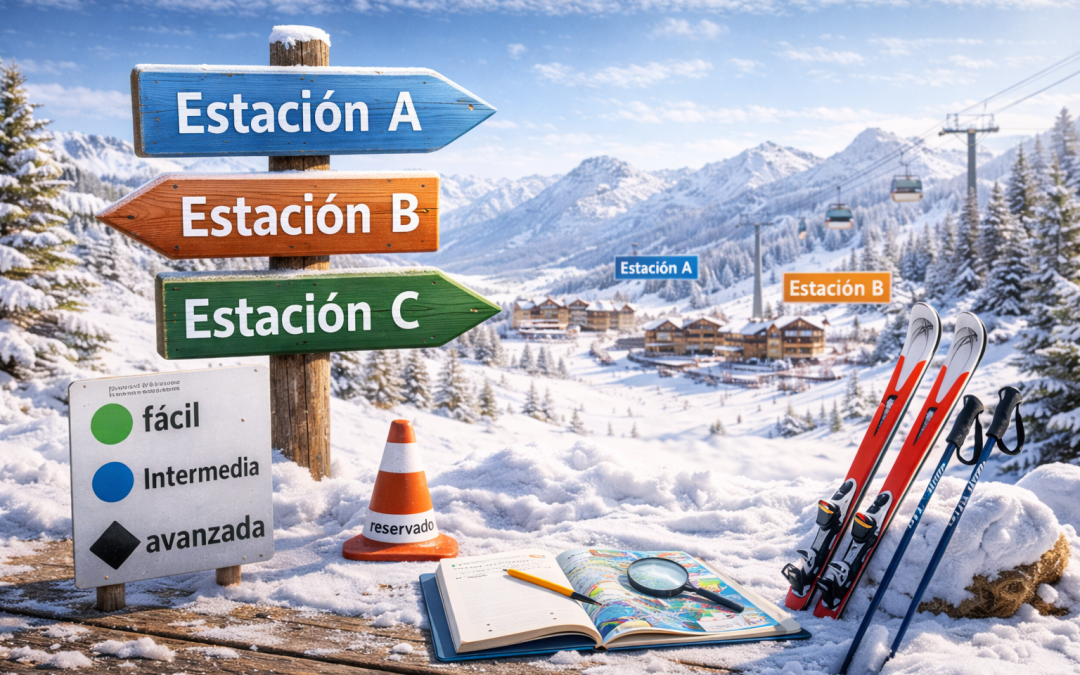
How to Choose the Best Ski Resort for a School Trip to the Snow
Introduction
Organizing a school trip to the snow involves many decisions. Among all of them, one of the most important is the choice of ski resort. Not all stations offer the same conditions for school groups, and selecting the right destination can make a big difference to the experience of students and teachers.
A well-chosen station facilitates learning, improves the safety of the group and allows the logistics of the trip to be much easier. On the other hand, choosing a resort that is not very suitable for school groups can lead to problems with organisation, saturation of slopes or difficulties in coordinating ski lessons.
In this article, we look at the main criteria that schools should consider when selecting a ski resort to organise a school trip. Accessibility, the quality of the slopes, the capacity of the accommodations and the experience in managing groups are some of the factors that can determine the success of the trip.
The importance of choosing the right destination
The destination of a school trip does not only define the landscape or the environment where the activity will take place. In the case of trips to the snow, the ski resort conditions such important aspects as ease of learning, student safety or logistical comfort.
A resort suitable for school groups usually offers wide slopes for beginners, specific learning areas and a structure that allows ski lessons to be organised with many students at the same time. These characteristics are essential when the group is made up of students who, in many cases, are skiing for the first time.
In addition, the resort also influences the organisation of journeys, the availability of rental equipment or the ease of access to ski lifts suitable for beginners. All these elements contribute to a smooth school trip.
Accessibility and distance from the educational center
One of the first factors that schools usually consider is the distance between the school and the ski resort. Very long journeys can be exhausting for students, especially when it comes to primary or early secondary school groups.
A relatively close station allows you to reduce transport hours and facilitates the logistics of the trip. In addition, shorter journeys often reduce transport costs and simplify overall organisation.
In many cases, the resorts located in the Catalan or Aragonese Pyrenees offer a good balance between accessibility and quality of facilities for educational centers located in Catalonia.
Slopes adapted for beginners
Most students who participate in a school trip to the snow have no previous experience with skiing. For this reason, it is essential that the resort has specific areas for beginners.
These areas are usually made up of very gentle green or blue slopes, with moderate slopes that allow you to learn the basic techniques safely. In addition, many resorts have beginners’ areas equipped with conveyor belts or very accessible ski lifts.
The existence of these areas greatly facilitates the work of ski instructors and allows students to progressively advance in their learning.
Ability to manage school groups
Not all stations are prepared to receive large school groups. Some resorts are more tourist-oriented or sport-oriented and do not have specific structures to manage groups of students.
Stations that usually work with schools usually offer services adapted to this type of trip. These services include the advance reservation of material, the organization of group classes or the assignment of specific areas for groups.
This experience in the management of school groups greatly facilitates coordination between the station, the organizing company and the teaching staff.
Available infrastructure and services
Another important element is the infrastructure available at the station. A school trip involves managing many needs at the same time: equipment rental, ski lessons, rest areas and restaurants.
Stations that have spacious and well-organized facilities allow these processes to be carried out more quickly and comfortably. For example, having specific spaces for groups facilitates the delivery of material and avoids long waits.
It is also useful that the station has covered areas where students can rest or meet with the teaching staff between the different activities.
The accommodation and its proximity to the slopes
Accommodation is another deciding factor in choosing a ski resort for a school trip. Hotels or hostels located near the slopes greatly simplify the daily organization.
When the accommodation is within walking distance of the station, travel is reduced and the group can make better use of the time available for activities.
In addition, accommodations that are used to receiving school groups usually offer adapted menus, spaces for group meetings and flexible schedules that facilitate coexistence.
Snow and weather conditions
Snow conditions also influence the choice of a ski resort. Stations located at higher altitudes usually guarantee better conditions throughout the season.
In addition, many modern resorts have artificial snow production systems that allow the slopes to be kept in good condition even when natural rainfall is scarce.
This aspect is especially important when the trip is organized well in advance, as weather conditions can vary significantly from year to year.
Safety and control on the slopes
Safety is a top priority on any school trip. Stations that work with educational groups usually have specific protocols in place to ensure student safety.
These protocols include proper track signage, the presence of rescue teams, and constant monitoring of learning areas.
Teachers and monitors also collaborate to ensure that students respect the basic rules of behaviour on the slopes.
Complementary activities
Many school trips to the snow include complementary activities in addition to skiing. These activities can enrich the students’ experience and offer alternatives in case the weather conditions prevent skiing.
Some resorts organise activities such as snowshoe excursions, educational workshops on the natural environment or leisure activities in the snow.
These proposals make it possible to diversify the travel experience and offer different learning opportunities.
The global experience of the students
When the ski resort is chosen well, the school trip becomes a very enriching experience for students. Learning to ski, living with colleagues and contact with nature generate memories that usually last for many years.
For many students, this type of trip represents their first experience in a winter mountain environment. This novelty helps to awaken their curiosity about the natural environment and to promote respect for the environment.
Teachers also observe positive changes in group dynamics. Living together outside the classroom usually strengthens relationships between classmates and improves the climate of the group.
Conclusion
Choosing the right ski resort is one of the most important factors in ensuring the success of a school trip to the snow. Accessibility, quality of slopes, experience in group management and availability of services are all elements that need to be carefully analyzed.
When the destination is selected taking into account the specific needs of students and teachers, the result is usually a very positive educational experience.
School trips to the snow not only allow students to learn to ski, but also promote coexistence, autonomy and contact with nature. For this reason, more and more schools are incorporating this type of activity into their pedagogical project.


